
How to Convert Hex to Decimal (With Examples)
Learn how to convert hexadecimal to decimal step by step with worked examples. Master positional values, powers of 16, and the A-F letter mappings.
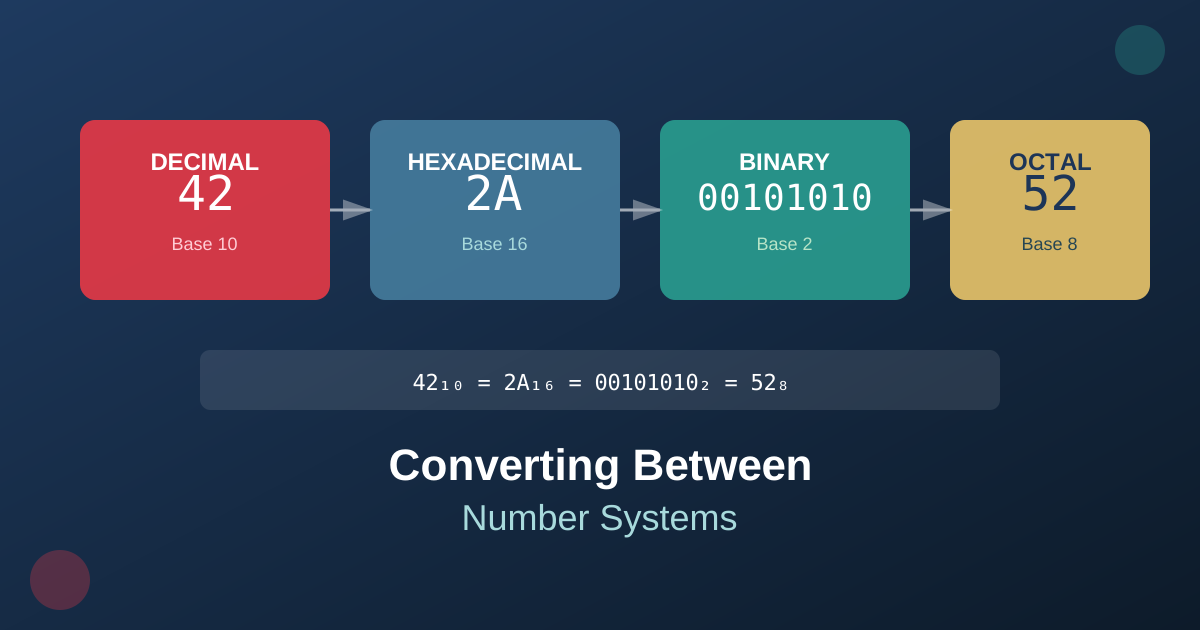
How to Convert Hex to Decimal (With Examples)
Converting hexadecimal to decimal is one of the most common base conversion tasks in computing. Whether you are reading a memory address, decoding a color code, or debugging a network packet, translating a hex value into the decimal number you already understand is a skill worth having.
Why Hex Uses Positional Values
Hexadecimal is a base-16 number system. Each digit position represents a power of 16, starting from 16⁰ on the right. Decimal works the same way with powers of 10, which is why converting simply means evaluating the hex value in base 10.
The letters A through F fill the gap between 9 and 10:
| Hex | 0 | 1 | 2 | 3 | 4 | 5 | 6 | 7 | 8 | 9 | A | B | C | D | E | F |
|---|---|---|---|---|---|---|---|---|---|---|---|---|---|---|---|---|
| Decimal | 0 | 1 | 2 | 3 | 4 | 5 | 6 | 7 | 8 | 9 | 10 | 11 | 12 | 13 | 14 | 15 |
The Step-by-Step Method
- Write down each hex digit and its position, starting from 0 on the right.
- Convert letters to their decimal values (A=10 through F=15).
- Multiply each digit by 16 raised to the power of its position.
- Add all the results together.
Example 1: Convert 1A to Decimal
- Position 0: A = 10, and 10 × 16⁰ = 10 × 1 = 10
- Position 1: 1 = 1, and 1 × 16¹ = 1 × 16 = 16
- Total: 16 + 10 = 26
Example 2: Convert FF to Decimal
- Position 0: F = 15, and 15 × 16⁰ = 15
- Position 1: F = 15, and 15 × 16¹ = 240
- Total: 240 + 15 = 255
That result matters: 255 is the largest value a single byte can hold, which is why you see FF so often in hex dumps and color codes.
Example 3: Convert 2F4 to Decimal
- Position 0: 4 × 16⁰ = 4
- Position 1: F = 15, so 15 × 16¹ = 240
- Position 2: 2 × 16² = 2 × 256 = 512
- Total: 512 + 240 + 4 = 756
Quick Conversion Table for Common Values
| Hex | 10 | 20 | 64 | 100 | 3E8 | FFFF |
|---|---|---|---|---|---|---|
| Decimal | 16 | 32 | 100 | 256 | 1000 | 65535 |
Notice that hex 64 equals decimal 100 and hex 3E8 equals 1000. Developers often use hex for these round numbers because prefixes like 0x100 are easier to recognize than 256 in raw output.
Common Mistakes to Avoid
- Reading A-F as decimal digits. F is 15, not 6 or some other value. Always convert letters first.
- Starting positions from the left. Powers increase from right to left, starting at 0.
- Forgetting that leading zeros do not change the value. 00FF and FF are the same number, 255.
Try It Yourself
For longer values, use the hex to text converter approach of breaking the value into bytes, or enter any value into our hexadecimal calculator to see the decimal result instantly alongside binary and octal. Once you have worked through a few examples by hand, the pattern becomes second nature — and the calculator becomes a quick way to check your work.