
Hexadecimal in Networking
How hexadecimal is used in MAC addresses, IPv6, and network protocols. Understand why networking relies on hex and how to read common network values.
Hexadecimal in Networking
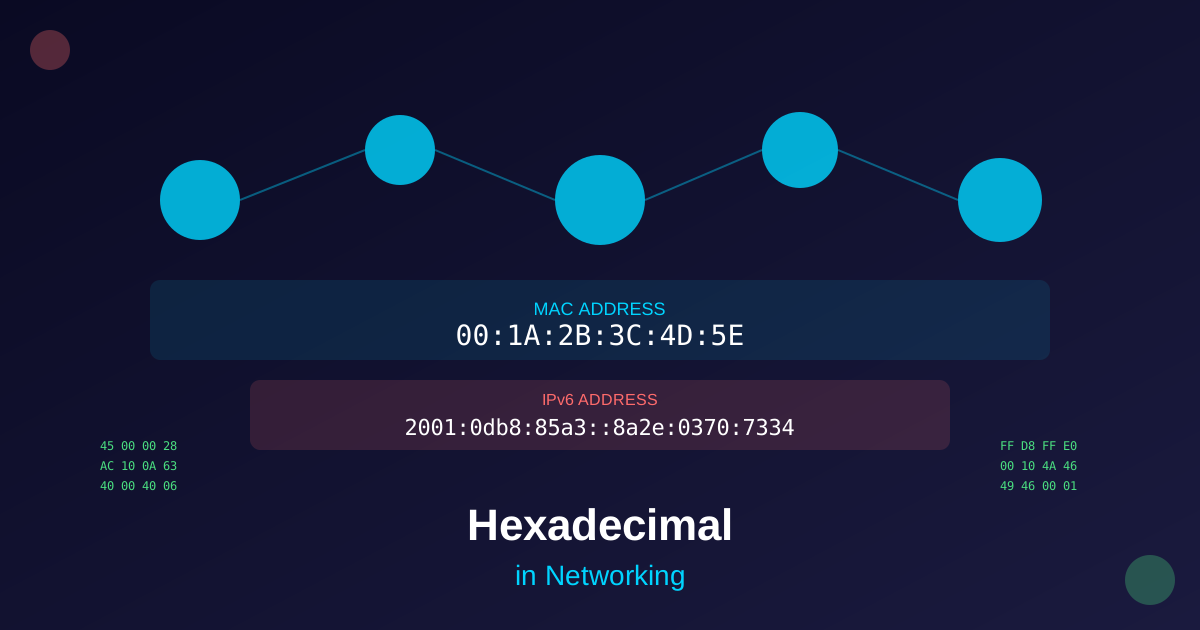
Hexadecimal notation is prevalent in networking. This article explores its use in MAC addresses, IPv6, and other network protocols.
MAC Addresses
A MAC (Media Access Control) address is a unique identifier for network interfaces:
00:1A:2B:3C:4D:5EEach pair represents one byte (8 bits), written as two hexadecimal digits. The first 3 bytes identify the manufacturer, and the last 3 are assigned by the manufacturer.
IPv6 Addresses
IPv6 addresses are 128-bit numbers written as 8 groups of 4 hexadecimal digits:
2001:0db8:85a3:0000:0000:8a2e:0370:7334Shorthand Notation
IPv6 allows shorthand:
- Leading zeros in a group can be omitted
- Consecutive groups of zeros can be replaced with
::
Example:
2001:0db8:0000:0000:0000:0000:0000:0001
→ 2001:db8::1
Network Protocols
HTTP Headers
Some HTTP headers use hex values:
- Cookies may contain hex-encoded data
- Authentication tokens often use hex encoding
Packet Analysis
When analyzing network packets, you’ll see hex values for:
- Protocol headers
- Payload data
- Checksums
Practical Applications
- Network Configuration: Setting static IPs and MAC addresses
- Security: Identifying devices on a network
- Troubleshooting: Analyzing packet captures
- Firewall Rules: Defining rules based on MAC addresses
Conclusion
Hexadecimal is essential for network professionals. Understanding it helps with configuration, troubleshooting, and security analysis.