
Understanding Hexadecimal Number System
A comprehensive guide to understanding hexadecimal numbers and their applications in computing. Learn base-16, nibbles, bytes, and conversion formulas clearly.
Understanding Hexadecimal Number System
The hexadecimal number system is fundamental to computing and digital electronics. In this guide, we’ll explore what hexadecimal is, why it’s used, and how to work with it.
What is Hexadecimal?
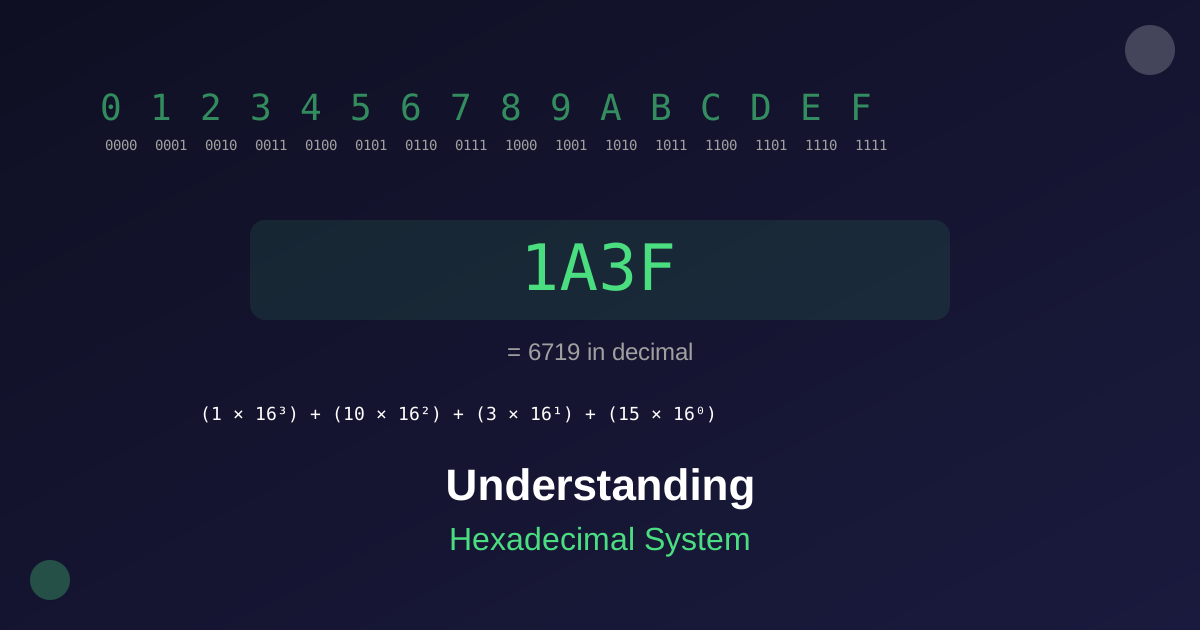
Hexadecimal is a base-16 number system that uses 16 unique symbols: 0-9 and A-F (or a-f). Each hexadecimal digit represents exactly 4 bits (a nibble), making it a convenient way to represent binary data.
Why Use Hexadecimal?
- Compact Representation: Hex provides a more compact way to represent binary numbers
- Easy Conversion: Each hex digit maps directly to 4 binary digits
- Human Readable: Easier for humans to read and write than binary
- Standard in Computing: Used extensively in memory addresses, color codes, and data representation
Hex to Decimal Conversion
To convert a hexadecimal number to decimal, multiply each digit by 16 raised to the power of its position:
Example: 1A3 (hex) = (1 × 16²) + (10 × 16¹) + (3 × 16⁰) = 256 + 160 + 3 = 419 (decimal)
Hex to Binary Conversion
Converting hex to binary is straightforward - each hex digit becomes 4 binary digits:
- 0 = 0000
- 1 = 0001
- 2 = 0010
- …
- F = 1111
Practical Applications
- Memory Addresses: Memory locations are often displayed in hex
- Color Codes: RGB colors are commonly represented as hex values (#FF5733)
- Assembly Language: Machine code is often written in hex
- Network Addresses: MAC addresses use hexadecimal notation
Conclusion
Understanding hexadecimal is essential for anyone working in computing. With practice, converting between hex, decimal, and binary becomes second nature.